

My architecture professor had a favorite saying: “Experience is the mother of wisdom.” Years ago, I filed that away as something teachers say. Today, having worked with dozens of clients at Primarc Studio across Islamabad, Rawalpindi, and beyond, I understand exactly what she meant.
My understanding of architectural design has changed completely since I graduated. What I once imagined as a purely creative, almost artistic pursuit has revealed itself to be something far more complex, a discipline that balances aesthetics with engineering, client aspirations with budget realities, and individual vision with community impact. This article is our attempt to honestly define what architectural design actually is, based on how we practice it every day.
What is Architectural Design? A Working Definition
Most people’s first encounter with a definition of any topic comes from Wikipedia, so let’s start there. Architecture, according to Wikipedia, is “the art and technique of designing and building, as distinguished from the skills associated with construction. It is both the process and the product of sketching, conceiving, planning, designing, and constructing buildings or other physical structures.”
This definition is a good starting point, but it’s worth unpacking what it actually means in practice.
Notice it says building, not 1 Kanal house, not 5 Marla house, not just a naqsha (house map). Architectural design applies to every category of built structure: residential homes, commercial plazas, institutional buildings, hospitals, schools, mosques, and mixed-use developments. The scale and purpose change, but the design process remains fundamentally the same. What the Wikipedia definition also makes clear is that architectural design is both a process and a product. The drawings, models, and renders we produce are the product. The thinking, problem-solving, and collaboration that produce them that is the process. Both matter.
The Architectural Design Process at Primarc Studio
People often ask what architects actually do all day. The honest answer is: far more than just draw beautiful buildings. Let me walk you through what a typical project looks like for us.
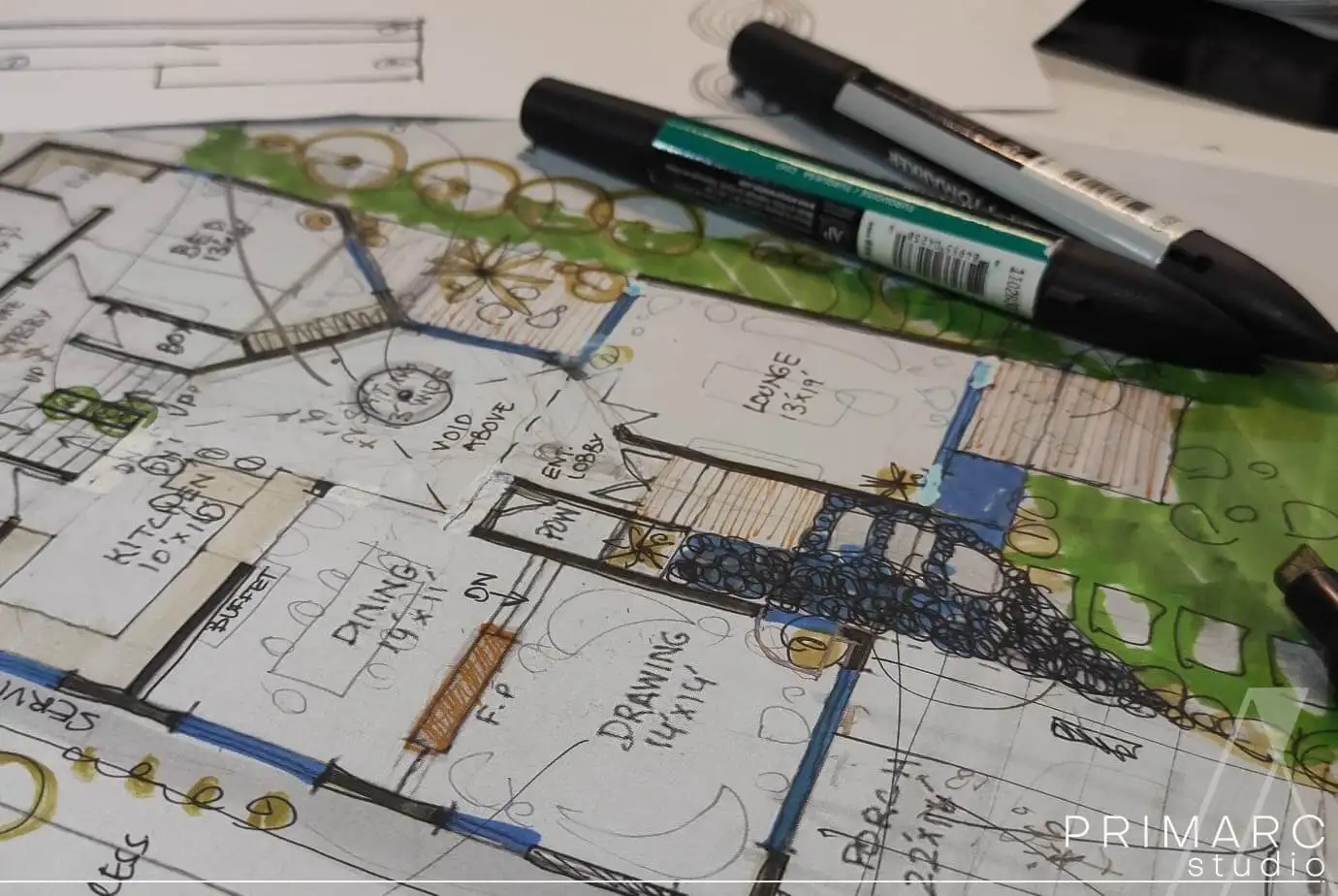
We rarely have the luxury of working on only glamorous projects with unlimited budgets. We take on each project as it comes, a 5 Marla house in Faisal Hills, a commercial plaza in Blue Area, a school in a smaller city. Each one demands the same rigour and creativity. Every project begins with a blank page and a conversation.
Phase 1: Concept Design
The concept phase is where the project is truly born. It starts with a deep-dive client brief understanding not just what spaces are needed, but how the client lives, works, or does business. We ask questions that go beyond room counts:
- How does the family move through the home throughout the day?
- What is the relationship between public and private spaces?
- Where does the sun rise relative to the plot? Where does it set?
- What does the view look like from each façade?
- What is the plot’s relationship to neighbouring buildings, roads, and greenery?
Only after absorbing all of this do we begin sketching. The output of this phase is typically a floor plan layout, an arrangement of spaces that satisfies the programme (the client’s list of requirements) while making efficient, logical, and beautiful use of the available site. We refine this layout in close collaboration with the client until the size of every room, the flow between spaces, and the overall organization of the building feels right. This is the foundation everything else is built on.
Example: For Saima Idrees House in DHA Phase 2, Islamabad, the concept phase involved carefully orienting the primary living spaces toward natural light while keeping the bedroom wing private and sheltered. a balance between openness and intimacy that the client had struggled to articulate, but recognized immediately when they saw it on paper.
Phase 2: Façade Design and Exterior Elevation
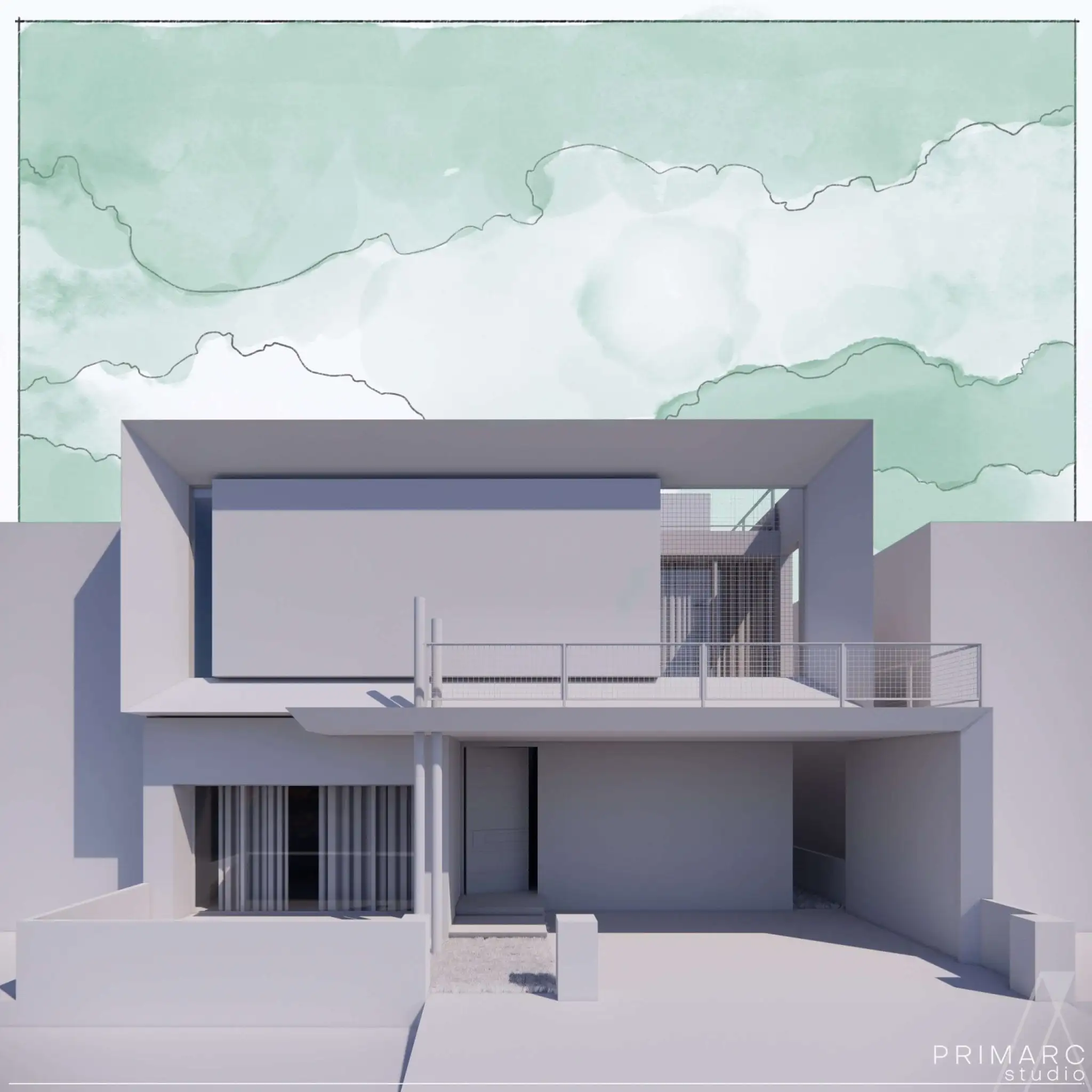
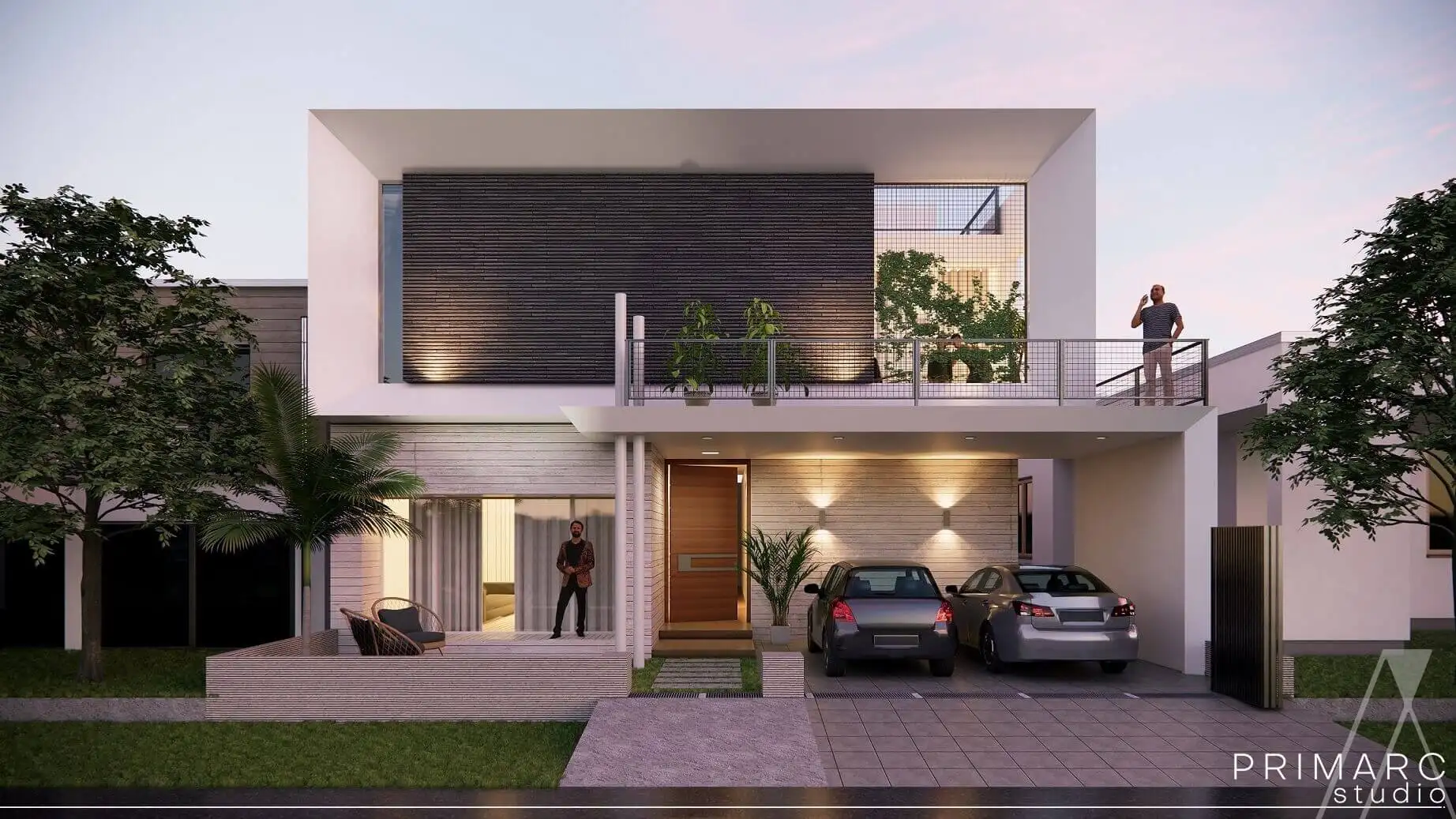
Once the floor plan is agreed upon, we move to designing the building’s exterior, what the world sees. This is the phase most people associate with architecture, and for good reason: the façade is the building’s identity.
Façade design is shaped by several factors simultaneously:
Intended use: A residence has different visual language to a clinic or a school. The exterior should communicate the building’s purpose, even subtly.
Context and neighborhood: A building does not exist in isolation. It sits within a street, a housing scheme, a city. We consider what surrounds the site, what building heights, materials, and styles are nearby and make a deliberate choice about whether to harmonize with or contrast against that context.
Budget: Every design decision has a cost implication. Cantilevered sections, custom metalwork, double-height glass façades all of these are achievable, but they must be weighed against what the project can support. Good design works within constraints, not against them.
Client expectations and lifestyle: A client who loves bold, contemporary aesthetics will get a very different façade to one who prefers understated elegance or classical proportions.
The output of this phase is the elevation drawings front, rear, and side views of the building along with conceptual renders that allow the client to visualize the final result before a single brick is laid.
Phase 3: Construction Drawings
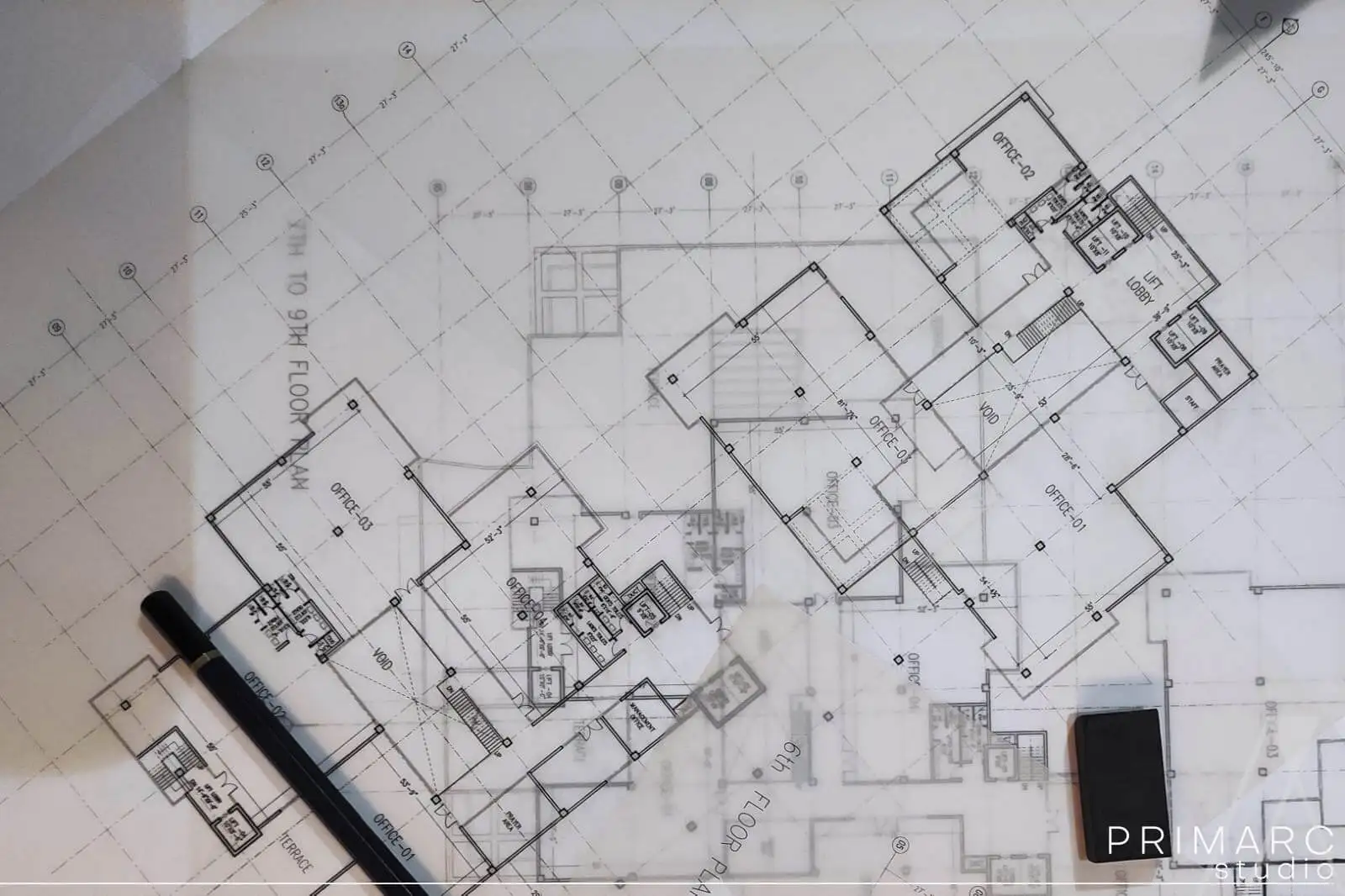
This is where design is translated into a language that builders, engineers, and contractors can use on site. Construction drawings are comprehensive and technical they leave nothing to interpretation.
This phase includes:
- Architectural drawings: Finalized layout plans, sections, and elevations with precise dimensions.
- Structural drawings: Column and beam positions, slab thicknesses, foundation details produced in coordination with a structural engineer.
- MEP drawings: Mechanical, electrical, internet, and plumbing layouts showing pipe runs, electrical points, HVAC positions, and drainage.
These drawings are coordinated carefully to avoid clashes for example, ensuring a beam does not conflict with a duct, or that a column does not fall in the middle of a doorway. This coordination work is unglamorous but critical. Errors caught on paper cost nothing. Errors discovered during construction cost time, money, and relationships.
The Six Core Considerations of Architectural Design
After years of working on projects of varying scale and type, here are the six things that, in my view, every architectural design must grapple with:
1. Function What is the building for, and how will people use it? This is the most fundamental question. A school and a hospital may have similar structural requirements, but their spatial logic is entirely different. A home for a joint family operates very differently to one for a young couple. Our discussion always starts here, followed by design which is according to our discussion and requirements.
2. Location and Climate Where the building sits determines a great deal. In Islamabad, we deal with hot summers, cold winters, and a monsoon season, all of which must inform decisions about window placement, insulation, roof design, and ventilation. The orientation of the plot, the direction of prevailing winds, and the path of the sun all influence how comfortable a building will be to live or work in.
3. Space Planning How do spaces relate to one another? Is the kitchen close enough to the dining area for practicality? Is the master bedroom sufficiently separated from the drawing room for privacy? Does the entrance sequence feel welcoming or abrupt? Good space planning makes buildings intuitive to inhabit.
4. Aesthetic Style What visual language will the building speak? This is partly about client preference, but also about context, culture, and purpose. Options in Pakistan typically range from contemporary minimalism to more ornate classical influences, from regional vernacular to international modernism or, often, a thoughtful hybrid of several.
5. Materials and Finishes Material choices define both the look and the long-term performance of a building. Brick, concrete, glass, steel, stone, wood each has different cost, maintenance, and aesthetic implications. The same applies to interior finishes: porcelain tiles versus ceramic, exposed concrete versus plaster, aluminium windows versus UPVC. These decisions must be made coherently, both aesthetically and financially.
6. Budget and Timeline Every project has constraints, and budget is almost always the most pressing. The skill of a good architect lies partly in knowing how to achieve the most within the available budget where to invest for maximum impact, and where to simplify without compromising quality. Timeline matters too, particularly for commercial clients where delays have direct financial consequences.
What Architectural Design Is Not (My Honest Take)
There are many disciplines that intersect with and support architectural design: interior design, landscape architecture, architectural visualization, structural engineering, MEP engineering. All of these are valuable. All of them contribute to the final quality of a project.
But strictly speaking, in my view, they are not architectural design itself. They are specialist fields that collaborate with architectural design to complete the whole. An architect coordinates these disciplines, but the core work of architectural design the spatial planning, the building’s form, its relationship to its site and context that is a distinct discipline.
You may disagree, and many practitioners would. The boundaries between these fields are blurrier in practice than in theory. But this is where I stand, for now, based on what I do every day.
Why Architectural Design Matters
Good architectural design does more than create attractive buildings. It shapes how people feel in spaces, how efficiently they can work or rest, and how buildings hold up over decades of use. In the context of Islamabad and Rawalpindi cities that are growing rapidly, where housing schemes are multiplying faster than infrastructure can support thoughtful architectural design is not a luxury. It is a responsibility. Every building we design at Primarc Studio is a contribution to the built environment of our city. We take that seriously.
Frequently Asked Questions
Question. What is the difference between architecture and architectural design?
Answer. Architecture refers to the broader discipline and profession, while architectural design refers specifically to the process of conceiving and developing a building from initial concept to construction documents.
Question. How many phases does architectural design have?
Answer. Typically three core phases: concept design, facade/elevation design, and construction drawings. Depending on the project, these may be subdivided further or combined.
Question. Do I need an architect for a house in Islamabad?
Answer. For any project in Islamabad or Rawalpindi, a licensed architect is required by the Capital Development Authority (CDA) or Rawalpindi Development Authority (RDA) to approve drawings. Beyond legal requirements, working with an architect ensures your home is designed holistically not just as a naqsha or map, but as a considered piece of architecture.
Question. How long does the architectural design phase take?
Answer. For a residential project, the design phase typically takes four to ten weeks, depending on the complexity of the project and how quickly decisions are made. Larger commercial or mixed-use projects can take considerably longer.
Question. What is MEP in architectural design?
Answer. MEP stands for Mechanical, Electrical, and Plumbing the engineering systems that make a building functional. These are designed in coordination with the architectural drawings to ensure everything integrates properly.
Conclusion
Architectural design, at its core, is a discipline of problem-solving through space. It asks: given this site, this budget, this client, and these needs what is the best building we can create? The answer is never straightforward, which is what makes it endlessly interesting.
At Primarc Studio, we have worked on projects across Islamabad, Rawalpindi, and beyond residential homes, commercial developments, institutional buildings, and more. Each one has deepened our understanding of what good architecture requires: rigour, empathy, creativity, and a genuine investment in the places and communities we build for.