

Imagine walking through your future home feeling the scale of the living room, stepping out onto the balcony, and seeing afternoon light pour through the windows before a single brick has been laid. This is not a distant concept. It is what Virtual Reality (VR) in architecture makes possible today, and it is one of the most transformative tools Primarc Studio brings to every residential and commercial project in Pakistan.
In this guide, we explain what VR is, how it differs from traditional 3D renders, how our process works, and why it leads to better buildings, happier clients, and fewer costly revisions.
What is Virtual Reality (VR)?
Virtual Reality (VR) is a computer-generated, fully immersive environment that a user can explore in three dimensions using a headset most commonly the Meta Quest (formerly Oculus). Unlike watching a video or looking at a static render on a screen of a phone or a TV, VR places you inside the space. You can turn your head, look up and down, step forward, and experience the proportions of a room as if you are physically standing in it. VR is not the same as a 3D render or video walkthrough. A render is a still image. A video walkthrough is a pre-recorded path. VR is interactive you control where you look and move, just as you would in real life.
In the context of architecture, VR is used to convert a building’s digital 3D model into a walkable, explorable environment. Clients wear the headset and are transported into their unbuilt home, apartment, office, or commercial plaza experiencing it at a human scale, in real time.
VR vs 3D Renders vs Physical Mockups: Which is Best for Architecture?
Clients often ask us how VR compares to traditional design visualization methods. The table below summarizes the key differences:
| Feature | VR Walkthrough | 3D Renders | Physical Mockup |
| Immersion Level | Full – you are inside it | Medium – viewed on screen | Medium – scale model only |
| Interactivity | High – move freely | None | Low – cannot enter |
| Design Changes | Easy before construction | Easy | Very difficult & costly |
| Lighting Simulation | Real-time, dynamic | Static snapshot | Dependent on model scale |
| Furniture Placement | Yes, in scale | Rendered only | Small-scale only |
| Cost to Revise | Medium | Low | Very high |
| Best For | Client decision-making | Marketing & Client approval | Early concept models |
How Primarc Studio’s VR Process Works
Our VR workflow is seamlessly integrated into our standard architectural design process. Here is how it works, step by step:
Step 1: Architectural Modelling
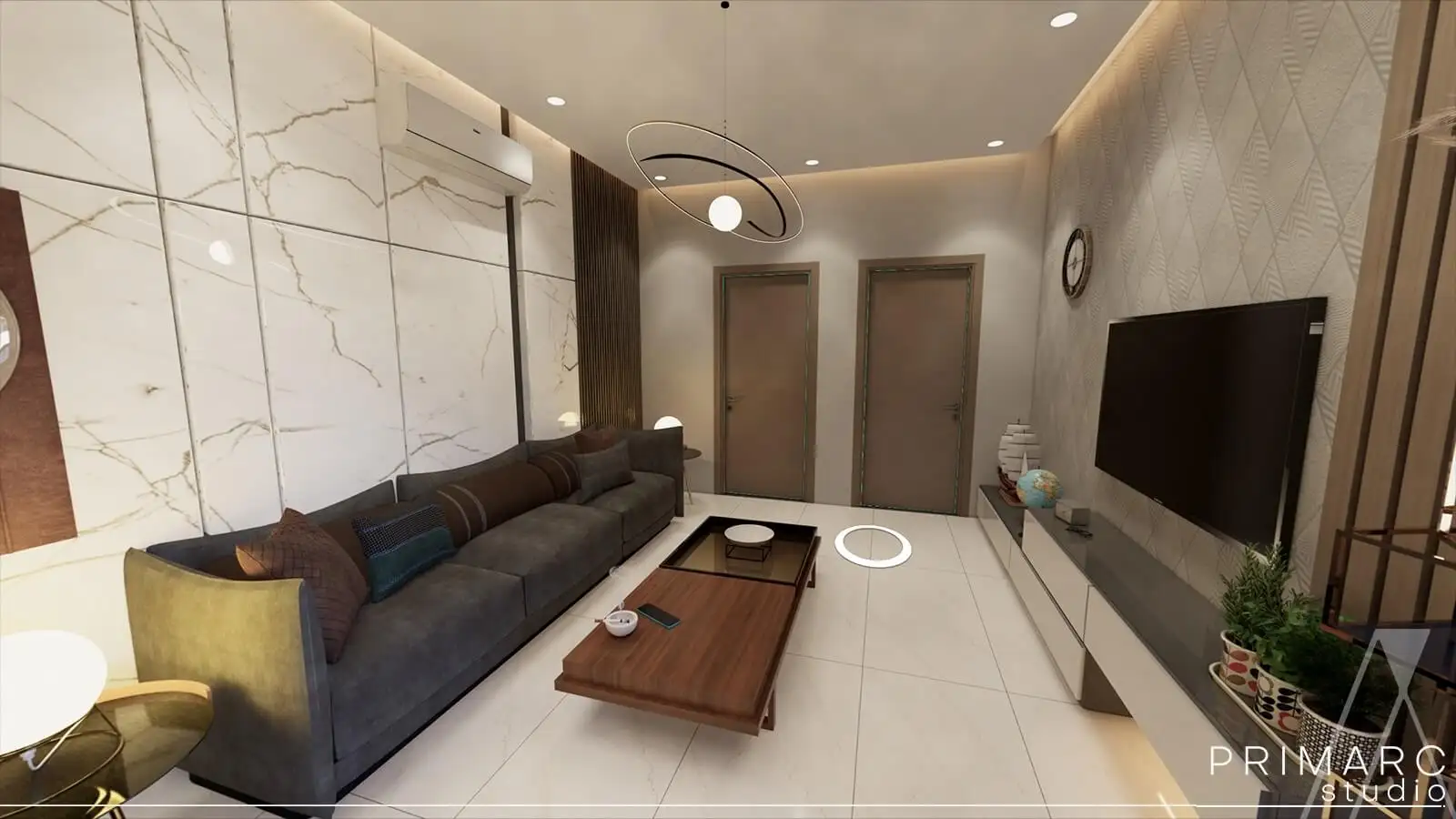
Once we finalise your design drawings and floor plans, our team builds a detailed 3D model of your project — complete with wall finishes, flooring materials, ceiling heights, window placements, and built-in furniture. Every spatial decision made on paper is translated into a three-dimensional environment.
Step 2: VR Environment Preparation
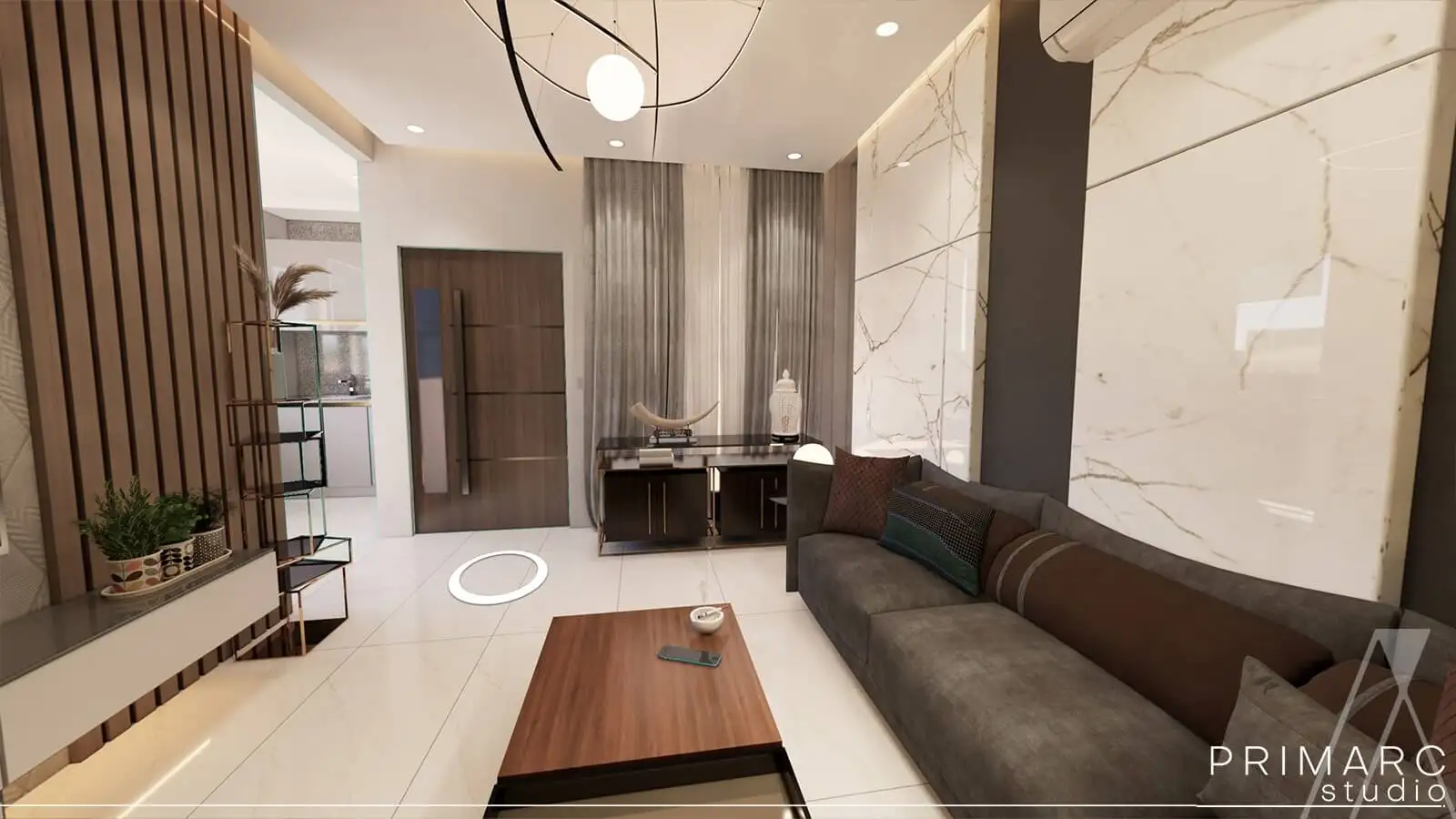
The 3D model is then optimised and loaded into our VR platform, compatible with the Meta Quest headset. We add realistic lighting conditions — including natural daylight at different times of the day and artificial lighting — to ensure the environment accurately reflects how your space will feel.
Step 3: The VR Session
Clients are invited to our Islamabad studio (or we conduct on-site sessions) where they put on the headset and take their first walk through their unbuilt project. This typically lasts 30 to 60 minutes. We guide them room by room, encouraging them to observe ceiling heights, sight lines, natural light, and the overall sense of scale.
Step 4: Design Refinement
The VR session almost always sparks valuable feedback. A client may realise a bedroom feels smaller than expected, that a window should be wider, or that a wall colour needs revisiting. These changes are made in the model before construction begins — at a fraction of what they would cost on-site.
Step 5: Confident Sign-Off
Once the client is fully satisfied with what they experience in VR, they sign off on the design with complete confidence. There are no surprises when construction concludes because the client has already lived in the space virtually.
VR for Residential Architecture in Pakistan: A Real Client Story
One of the most memorable VR experiences we delivered was for a client building their family home in Islamabad. They came to us with a clear vision but struggled to translate the floor plans into a mental image of what the finished home would feel and look like.
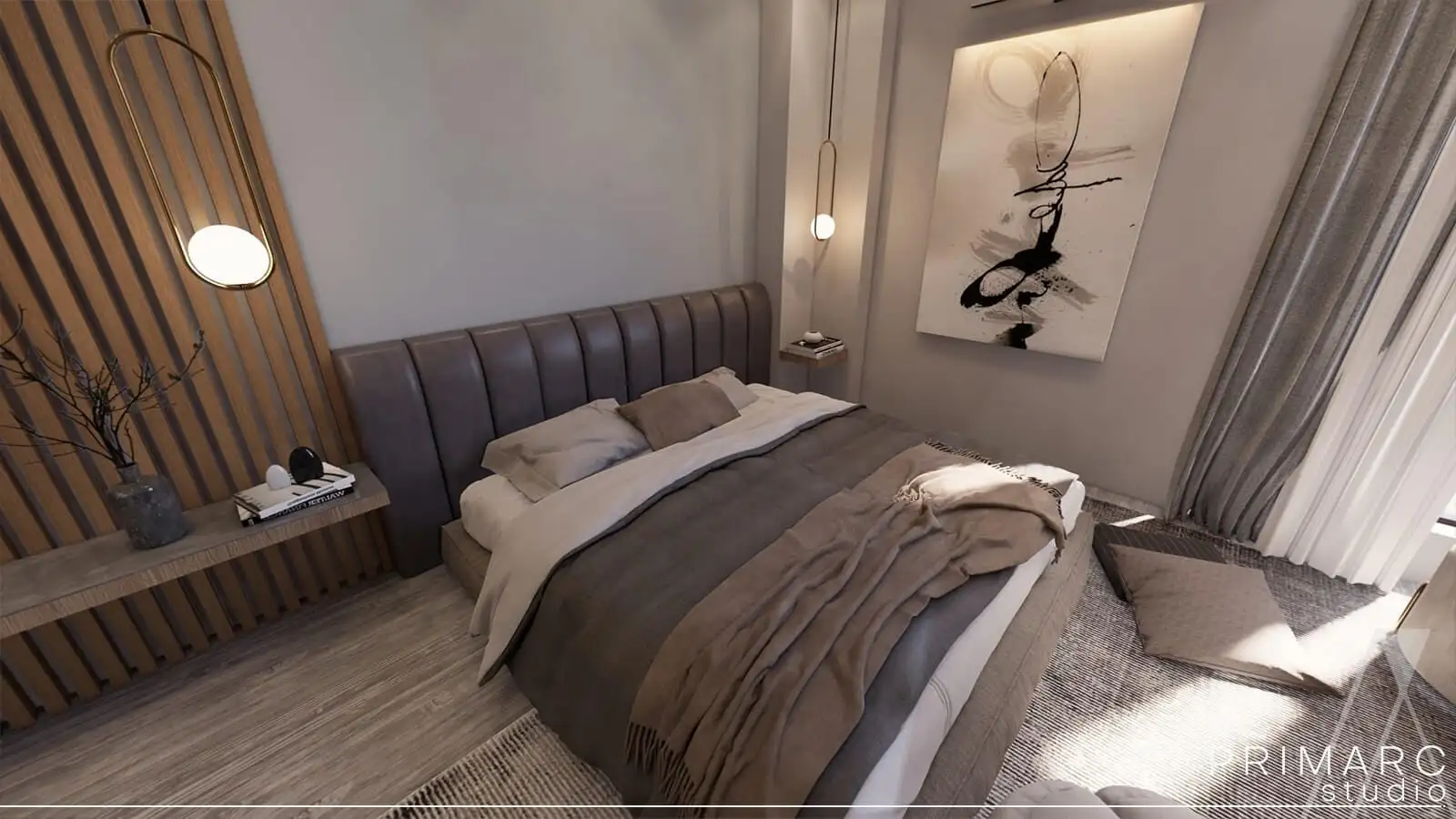
We created a full VR walkthrough of their home. The moment they put on the headset, the difference was immediate. They could walk from the entrance into the lounge, head upstairs to the bedrooms, and step out onto the balcony — all before a single wall had been built. They quickly identified a room layout they wanted adjusted, chose between two material options for the kitchen, and decided to add weatherproofing features that have since proved invaluable through Islamabad’s monsoon seasons.
When the house was completed, the client told us it felt exactly as they had experienced it in VR which is precisely the outcome we aim for on every project. Client result: By using VR during the design phase, this client avoided two significant post-construction modifications and made more confident decisions on finishes and materials saving both time and money.
VR for Commercial Architecture and Real Estate in Pakistan
Virtual Reality in architecture is not limited to residential projects. At Primarc Studio, we use VR extensively for commercial developments, including shopping plazas, coworking offices, apartment blocks, and retail spaces — particularly to support developers and real estate agents selling units off-plan.
When a buyer cannot physically visit a completed building because it does not yet exist, VR becomes the most powerful sales and decision-making tool available. Potential buyers can walk the corridors of a mall, explore an apartment floor plan, or assess a commercial unit’s layout all in a fully immersive environment.
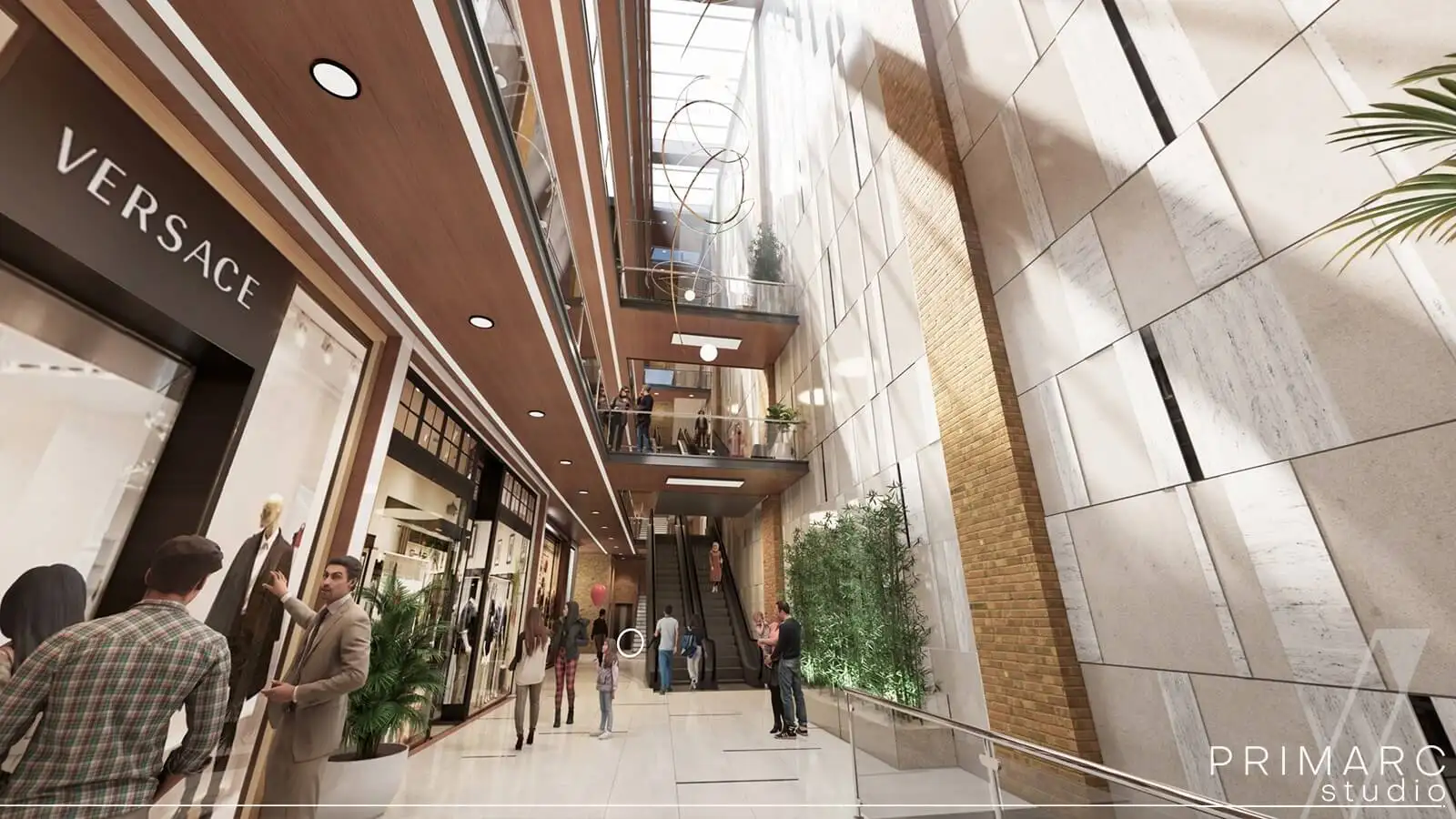
We have used VR for commercial projects including a shopping mall in Rawalpindi, where buyers could experience the entrance atrium, skylights, and individual unit configurations before the foundation was poured. The ability to customise fit-out options — a boutique owner viewing different window display configurations, or a restaurant tenant assessing seating capacity makes VR an exceptionally powerful commercial tool.
What VR Equipment Does Primarc Studio Use?
We currently use the Meta Quest headset series for all our VR sessions. Meta Quest is a standalone headset it does not require a PC or wires which means we can conduct VR sessions both in our Islamabad studio and at client sites.
The headset delivers a high-resolution, wide field-of-view experience that accurately represents material textures, spatial proportions, and lighting. For projects with specific lighting requirements, we also simulate seasonal sun angles and interior artificial lighting conditions so clients can experience their space at different times of day.
Frequently Asked Questions About VR in Architecture
Q1. What is virtual reality used for in architecture?
VR is used in architecture to help clients experience and interact with their building design before construction begins. It allows clients to walk through rooms, assess scale, experiment with finishes and furniture placement, and make informed design decisions — all in an immersive, three-dimensional environment.
Q2. How does VR help in home design decisions?
VR eliminates the guesswork associated with 2D floor plans and static renders. When a client experiences their home in VR, they can instantly identify whether a room feels too small, whether a window placement is correct, or whether a material choice works in context. This leads to faster, more confident design approvals and fewer post-construction regrets.
Q3. Is virtual reality expensive for architecture projects in Pakistan?
At Primarc Studio, VR is offered as part of our comprehensive design service — not as an expensive add-on. The cost of producing a VR walkthrough is far outweighed by the savings it generates by preventing post-construction modifications, which can cost significantly more than the VR session itself.
Q4. Can I use VR if I am building a commercial plaza or real estate development?
Absolutely. VR is highly effective for commercial architecture and off-plan real estate sales in Pakistan. It allows developers to show buyers exactly what a space will look and feel like before it is built — making it a powerful tool for selling units in apartments, plazas, and mixed-use developments.
Q5. Where does Primarc Studio offer VR architecture services?
We are based in Islamabad and offer VR architecture services across Pakistan, with a primary focus on Islamabad and Rawalpindi. We can also arrange on-site VR sessions for clients in other cities for larger projects.
Q6. How long does a VR walkthrough session take?
A typical VR walkthrough session at Primarc Studio lasts between 30 and 60 minutes, depending on the size and complexity of the project. We guide clients through the space systematically and allow time for questions, design discussions, and multiple viewings of key areas.
Why Virtual Reality in Architecture is the Future of Design in Pakistan
Pakistan’s construction industry is evolving rapidly. As client expectations grow and projects become more complex, the gap between what a client imagines and what gets built must be closed as early as possible. VR is the most effective tool available for doing exactly that. At Primarc Studio, we believe that every client deserves to walk through their future home or commercial space before it is built. VR gives them that experience and with it, the confidence to make better decisions, invest wisely, and ultimately live or work in a space they truly love.
Whether you are planning a family home in Islamabad, a residential apartment in Rawalpindi, or a commercial development anywhere in Pakistan, our team is ready to bring your vision to life first in virtual reality, and then in the real world.